

RockTextureAtlas
Search here
ForewordNote From CoordinatorAcknowledgementTextures in Igneous RocksTextures in Pyroclastic RocksTextures in Sedimentary RocksTextures in Metamorphic RocksDeformation related MicrostructuresVugs,Veins and PseudotachyliteTextures of Shock MetamorphismTextures in Chondritic meteoritesFluid Inclusion microstructuresGemstones
Textures in Sedimentary Rocks
4A. Clastic Textures
IntroductionTexture of a sedimentary rock denotes the size, shape and arrangement of constituent grains. Though it is a small scale character, but it has great significance on the density, porosity or permeability of the rock. It is also important for understanding the post depositional and diagenetic history of the rock. It provides temperature, pressure and nature of subsurface solutions which influenced the diagenetic and cementation processes. This fundamental property is used to understand the transport history, energy conditions as well as depositional processes associated with the rock which is of prime importance in petroleum geology, hydrogeology and geophysics.
The sedimentary textures can be divided into two major groups, i.e. clastic and non clastic. When the rock is composed of grains derived from preexisting rocks, it is termed as clastic and non-clastic, where sediments are precipitated from a fluid. In this chapter, we will be discussing the clastic sedimentary textures.
Clastic sedimentary rocks are the products of physical process of sedimentation, i.e. mechanical or physical weathering. The texture of clastic sedimentary rocks encompasses few fundamental properties viz. grain size, grain shape (form, roundness, and surface texture of grains), fabric and sorting. The first two properties i.e. grain size and shape are properties of discrete grains and fabric is a property of grain aggregates. On the basis of these three basic properties, the texture of a clastic sedimentary rock is described in terms of the grain size, sorting, roundness, packing of grains, textural maturity and binding materials (matrix and cement).
4.1 Constituent aggregates of sedimentary rocks
4.1.1 Grains, matrix and cement
The primary constituents of a sedimentary rock can be divided mainly into grains and matrix. They are comparable to the phenocrysts and groundmass of an igneous rock. The distinction between grains and matrix components is relative and based on the visual contrast in grain size. The grains of a sedimentary rock form the framework whereas the matrix materials occupy the space between the framework constituents. There is no clear cut division between the size of framework grains and the matrix material. For example, in a sandstone, the sand grains are considered as framework and the finer muds as matrix, but for a conglomerate, the gravel will be constituting the framework with sand as matrix, however, both are primary in origin and have the same compositional properties.
The third constituent, cement is not necessarily to be present in all rocks, is post-depositional, and it may fill the pore spaces available. Cements in sedimentary rocks are products of cementation, which is the process of precipitation of mineral matter in intergranular and intra-granular pores (Scholle and Ulmer-Scholle, 1978) (Fig 4.1). As the cement is produced under the influence of circulating subsurface solutions, hence it is always secondary in nature. The most common cements are siliceous, calcareous, ferruginous and clayey.
4.2 Textural properties of sedimentary rocks
4.2.1 Grain size
The important textural character of grain size provides information about nature of source rocks, mode and medium of transportation as well as sorting and depositional history of the sediments. Grain size also gives additional clues regarding the paleoclimate and other tectonic factors at the source and of the basin of deposition for the sediments. As the siliclastic particles have a varied range of size from clay to boulders, logarithmic or geometric scales have been developed to represent it.
The most commonly used scale is the Udden–Wentworth scale (Udden, 1914; Wentworth, 1922). Eachvalue in this scale is either two times larger than the preceding value or one-half as largeas the succeeding grain size, depending upon the direction of grain size measurement (Table 4.1). The Udden–Wentworth scale extends from <1/256mm (0.0039mm) to > 256mm. This scale is divided into four major size categories (clay, silt,sand, and gravel). However, there are further sub divisions which are reproduced in the following table. The Udden–Wentworth scale effectively characterizes the wide range of particle sizes but it is difficult to use for graphical representations and statistical calculations due to the difference in size classes. To overcome this issue, a logarithmic scale is used plotting the logarithm to base 2 of the millimeter sizes. The phi value (φ) is related to grain diameter (d) by the expression φ = −log2d. (Krumbein, 1934, 1938).
In the following table, equivalent phi and millimeter sizes are shown. Increasing absolute value of negative phi numbers indicates increasing millimeter size, whereas increasing positive phi numbers indicate decreasing millimeter size.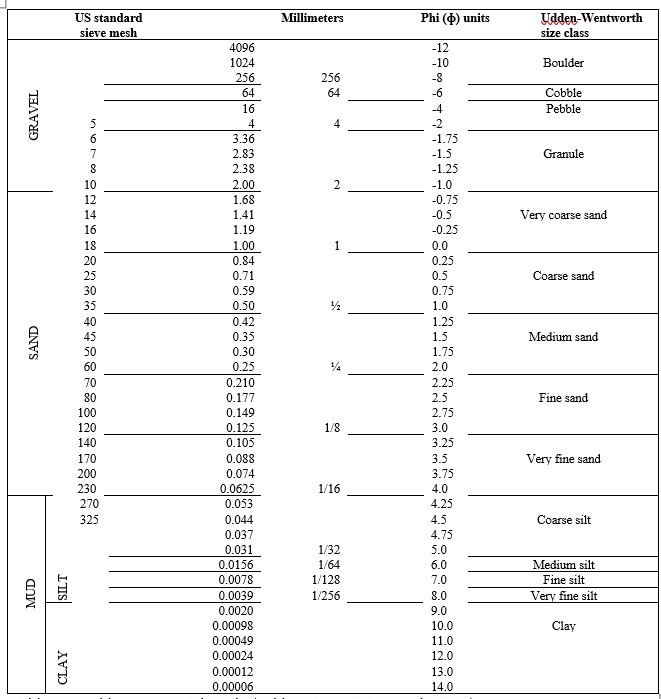 Table 4.1: Udden-Wentworth scale (Udden, 1914; Wentworth, 1922)
Table 4.1: Udden-Wentworth scale (Udden, 1914; Wentworth, 1922)The familiar nomenclature of sedimentary rock viz. conglomerate, sandstone, siltstone and claystone have been derived using the grain size terms mentioned in these scales (Fig 4.2.1a-c).
4.3 Morphology of the individual grains
Grain shape denotes all aspects of the external morphology of individual grains which include form, roundness as well as surface texture. The general morphology and outline of a grain is represented by the term ‘Form’ whereas ‘Roundness’ is the measure of the sharpness of the corners. The form is a three dimensional measure and roundness is commonly measured in two dimensions only. The micro relief features on the surfaces of grains are referred as surface textures. The original form of a particular grain is generally considered to be superimposed by roundness and further by surface textures with subsequent transportation and other depositional processes. (Barrett, 1980).
4.3.1 Form
Sedimentologists have tried to express the form of a grain using flatness, elongation, and sphericity (Barrett, 1980; Illenberger,1991). Out of all these characters, the sphericity has been given the prime importance which indicates the degree to which the shape of grains approaches the shape of a sphere (Wadell, 1932). Determination of sphericity involves measurement of the three orthogonal axes of particle sand calculation of a sphericity value based on the relative lengths of these axes. More the equal lengths of the axes, the more nearly the particle approaches the shape of a sphere (Wadell, 1932). On the basis of sphericity, the sediments can be classified as spheroidal, platy, prismatic and blade shaped. Zingg’ shape classification (1935) is a modified one which is derived by plotting the ratio of the intermediate to long particle axis versus the ratio of the short to intermediate particle axis on a bivariate diagram. This classification classifies the particle shapes into oblate, equiaxial, triaxial and prolate types (Fig. 4.3.1a-d).
4.3.2 Roundness
Roundness is one of the important morphological character of siliciclastic grains which represents the degree of smoothing due to abrasion. It is expressed as the ratio of the average radius of curvature of the edges or corners to the radius of curvature of the maximum inscribed sphere (Powers, 1953).
Although the Roundness can be numerically expressed, in most of the cases, a visual chart (Powers, 1953) is used with the following categories (Fig 4.3.2a).
- Very angular: corners sharp and jagged
- Angular
- Sub angular
- Sub rounded
- Rounded
- Well rounded: corners completely rounded
The chart offers a quick and easy way to estimate two-dimensional particle shape (Fig. 4.3.2b-d), although the comparisons can be subjective as this property of a grain is dependent on the distance, mode, time of transportation as well on the composition, hardness and cleavage. Grain size and energy conditions also play an important role in rounding of the grains. Roundness is not an important property for very fine grained sedimentary rock as they are invariably angular and are not abraded easily due to their transportation in suspension mode (Boggs, 2009).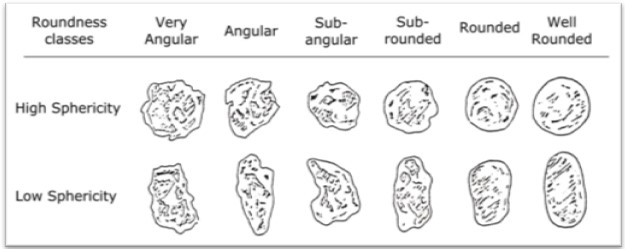 Fig. 4.3.2a. Chart for estimating the roundness and sphericity of sedimentary particles based upon comparisons with particles of known sphericity and roundness (based on Powers, 1953).
Fig. 4.3.2a. Chart for estimating the roundness and sphericity of sedimentary particles based upon comparisons with particles of known sphericity and roundness (based on Powers, 1953).4.3.3 Surface textures
The surface textures are best studied on the larger grains. However, small scale low relief features on finer grains are studied with microscopes or using scanning electron microscopes (Fig. 4.3.3a-b). Some of the important and distinctive surface textures are V-shaped pits, grooves (beach and near shore deposition), conchoidal fractures (glacial and fluvial), Ladder-like fractures, nail marks (fluvial), frosting, upturned plates (aeolian environment), chatter marks (glacial and marine) (Krinsley and Margolis, 1969; Mahaney and Mahaney, 2002; Cheng et al, 2017).
4.4 Textural characters of grain aggregates
4.4.1 Fabric
The textural characteristics represented by the grain aggregates are termed as fabric of the sedimentary rock.
Two main attributes of the aggregates, i.e. packing and orientation denotes the fabric which are very much controlled by the physical and chemical processes acting on the aggregates during and post deposition. Packing of the aggregates is dominantly compaction controlled whereas the orientation of the grains is mainly a result of the physical processes at the time of deposition. The orientation of the grains can be modified by later bioturbation activities as well as to some extent by compaction.
4.4.1.1 Packing
Packing in a sedimentary rock has been defined as the mutual spatial relationship among grains by Kahn (1956). Bates and Jackson (1980), described packing as “the manner of arrangement or spacing of the solid particles in a sediment or sedimentary rock…; specifically, the arrangement of clastic grains entirely apart from any authigenic grains that may have crystallized between them.” According to Pandalai and Basumallick (1984), packing is “the effective utilization of space by mutual arrangement of the constituent grains of an aggregate”. Considering all the definitions, packing can be expressed as a function of several variables such as particle size and sorting, particle shape, and particle orientation or arrangement (Boggs, 2009). For quantification purpose, two packing indices are in use, i.e. the contact index (= average number of contacts/grain) and the tight packing index (= average number of long, concavo–convex and sutured contacts/grain) (McBride etal., 1991) (Fig 4.4.1a-d).
4.4.1.2 Orientation
The arrangement of the platy, flaky, or elongated particles in a sedimentary rock in a particular (or random) direction is defined as the orientation. Orientation of the grains can tell a lot about the depositional process and sometimes the post depositional diagenetic events. The orientation of the platy grains can indicate whether the grains were deposited by settling from suspension without or with current flow. In absence of sedimentary structures suitable for paleocurrent analysis, orientation of the grains may provide useful information regarding it (Boggs, 2009) (Fig. 4.4.1e-f).
4.5 Secondary properties
There are few secondary properties of sedimentary rock controlled by the main textural attributes, e.g. porosity, permeability, sorting etc.
4.5.1 Porosity
It is defined as the percentage of void space in a rock (Fig. 4.5.1a-b). It is the ratio of the volume of the voids or pore space divided by the total volume. Qualitative “estimates” of porosity can be made by scanning a rock specimen with a hand lens or under the microscope but for a quantitative estimate, point counting techniques has to be used.
4.5.2 Permeability
It indicates the ease of passage of liquids or gases or specific chemicals through the material. Permeability is determined by applying a head and calculating the amount of liquid or gas passing through the sample.
4.5.3 Sorting
Sorting is a secondary character of the sedimentary rock defining the degree of uniformity of grain size. Sorting indicates how much transport the sediment has undergone. The rock will be termed as well sorted (beach sands) if the grains are of similar size (Fig 4.5.3a). Well sorted sediments are a resultant of longer sediment transport due to which the different size fractions were deposited in different places under unidirectional flow. Normally the Coarser sediments are found nearest to the provenance and the finest sediments are transported the farthest. When the grains are of different sizes, the rock can be defined as a poorly sorted one (Fig 4.5.3b). Poor sorting of sediments occurs in case of less transport distance from provenance to depositional basin (for example glacial till).
4.6 Textural maturity
Maturity of the sedimentary rock indicates the time that the sediments has been in the sedimentary cycle. With increasing transport distance and time, the grains will become more rounded as well as well sorted and the rock can be termed as texturally mature. At the same time an ill sorted sedimentary rock containing angular fragments will indicate very less transportation distance and time and will be termed as texturally immature (Fig 4.6a-b).
When the sedimentary rock is having very well sorted, well rounded grain supported fabric without matrix, they are termed as super mature (e.g. beach sands). The rock will be termed as mature if the sediments it contains shows moderate to good sorting, rounded to sub-rounded grains and little matrix (e.g.fluvial deposits) and, when the grains are angular, poorly sorted with more matrix, it is termed as immature (e. g. Glacial deposits)
The composition of the rock can also define the maturity. For example, a sedimentary rock containing glassy angular volcanic fragments and olivine crystals will be termed as both texturally and compositionally immature. The angular fragments indicate that they have not been transported very far and it contains unstable glass along with minerals that are not very stable near the surface. On the other hand, beach sand is compositionally mature because it is made up only of quartz which is very stable at the earth's surface.
4.7 Overgrowth of grains
The development of cement around detrital grains during diagenesis leads to overgrowth of grains. The most common overgrowths are of silica, carbonate and feldspar. Siliceous cements are formed in most sedimentary basins at a diagenetic temperature of 60–1450C (Lai et al., 2017). When the quartz cement grows in optical continuity with the detrital grains which they have enclosed are called quartz overgrowths (Fig 4.7a). During early diagenesis, calcite cements can also get precipitated developing poikilotopic textures (Fig.4.7b, c). Due to later overgrowths of these cements, the porosity and permeability of the rocks get affected (Tingate and Rezaee, 1997; Berger and Roselle, 2001).
4B. Chemogenic Sedimentary Texture
IntroductionChemogenic sedimentary rocks form due to precipitation of various chemical substances from the solution. Chemogenic deposits may form in sea, continental or in intermediate environments. The composition and condition of formation of chemogenic sedimentary rocks vary depending upon the climatic condition and the composition of the medium in which the rock is precipitating. Considering the proportion of their abundance, chemogenic sedimentary rock forms a very small percentage of the total sedimentary record but the petrographic studies of these rocks are really important in view of their great economic importance. Chemogenic deposits differ considerably in terms of their composition depending upon the climatic condition under which the rocks were precipitated and deposited (Bridge and Demicco, 2008). Ancient chemogenic and or biochemogenic sedimentary rocks consist of:
- carbonate sedimentary rocks;
- cherts and related siliceous sedimentary rocks;
- saline deposits (commonly referred to as evaporites);
- iron-rich sedimentary rocks (ironstones); and
- phosphorites (Pettijohn, 1975).
4.8 Carbonate sedimentary rocks
Carbonate rocks are the most abundant non-terrigenous sedimentary rocks. In contrast to terrigenous rocks, carbonate rocks form chemically and biochemically and comprises material formed generally at or near the site of final accumulation of the sediment; it constitute about one-fifth of all sedimentary rocks in the stratigraphic record (Prothero and Schwab, 2014). Carbonates rocks are generally having >50% primary carbonate minerals. Two carbonate minerals are common in limestone - calcite (CaCO3) and dolomite [CaMg(CO3)2]. The carbonate depositional environment is a dynamic system that is influenced by a variety of parameters such as climate (humidity, temperature), nutrient availability, productivity, sea level changes, tectonic movements, changes in water, wind energy, biological processes (Westphal et al., 2010) and most important is the influx of fresh water in the depositional basin. The following conditions are favorable for carbonate precipitation:
- Warm water(tropical; 30oN to 30oS latitude)
- Slight increase in temperature or alkalinity
- Shallow shelf environment i.e. within the photic zone (mostly <10-20 m of water depth) although carbonate can also accumulate in deep water (pelagic oozes). Though, pelagic oozes are generally siliceous; and below CCD carbonate becomes unstable and it dissolves more than its precipitation.
In addition, inorganic precipitation from sea water also occurs. Carbonate deposits can also form in continental settings (lacustrine, desert, soil, springs).
Scheme for petrographic description for carbonate rocks have been well illustrated by Tucker (2001; Table 4.2) which is given below- 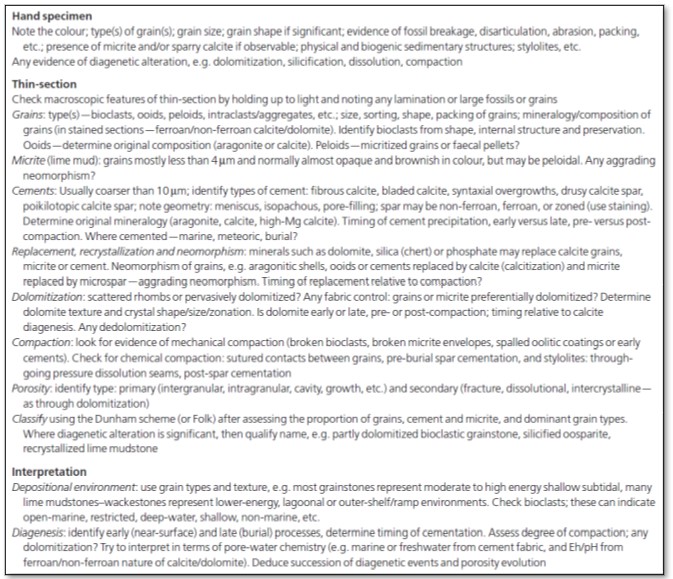 Table 4.2 Scheme for petrographic description for carbonate rocks (after Tucker, 2001).
Table 4.2 Scheme for petrographic description for carbonate rocks (after Tucker, 2001).4.8.1 Carbonate Texture
Though carbonate rocks are generally produced by chemical precipitation, the textures of observed are enormously variable showing characteristic grain sizes, sorting and rounding similar to clastic sediments. In carbonates, the matrix can range from fine grained carbonate mud to crystalline calcite or dolomite. The two most important components of carbonate rocks are allochemical components and orthochemical components.
Allochemical components: Allochemical components or allochems are any grains of calcium carbonate that, after formation, are transported and deposited as clasts. They are analogous to rock and mineral fragments in the framework fraction of terrigenous sandstone (Prothero and Schwab, 2014). They are grains often precipitated by organisms that formed elsewhere and became included in the carbonate sediment. The major allochemical components found in carbonate rocks include ooids, bioclasts, peloids and intraclasts and / or extraclasts.
Ooids: These are spherical sand sized (<2 mm in diameter) particles that have a concentric or radial internal structure. These are thought to be abiogenic in origin. The central part of each particle comprises of a grain surrounded by thin concentric layers of chemically precipitated calcite. Pisolites are also same as oolites having diameter >2 mm. Oncolites are spheroidal stromatolites having diameter > 1-2 cm.
Bioclasts: Bioclasts or fossil fragments are whole or broken skeletons of organisms / fossils. These may range in size from gravel to sand, depending on the different organism and the degree to which the grains are broken by different physical processes during transport.
Peloids: These are spherical or elliptical aggregates of microcrystalline calcite (silt to fine sand-sized, typically 0.03 to 0.3 mm long, although some can exceed 1-2 cm) carbonate particles with no distinctive internal structure and they are generally very uniform in both shape and size. Mostly these are thought to be fecal pellets and commonly occur in clusters. As these are small in size, the peloids are much easier seen under thin section than in hand specimen.
Intraclasts and Extraclasts: Intraclasts are fragment of penecontemporaneous, commonly weakly consolidated, carbonate sediment that has been eroded and re-deposited, generally nearby, within the same depositional sequence in which it formed (Folk, 1959 and 1962). Intraclasts are typically large grains (several mm to several cm or more) with moderate to good rounding and are usually monomict. Extraclasts are detrital grain of lithified carbonate sediment (lithoclast) derived from outside the depositional area of current sedimentation (Folk, 1959). Extraclasts are large, sub-rounded to well rounded grains may be mixed with non-carbonate sedimentary rock fragments as they are detrital grains derived from an older rock.
Orthochemical components: Orthochemical components in carbonate rocks consists either of fine grained microcrystalline calcite called micrite or coarser grained calcite crystals formed during diagenesis called sparite.
Microcrystalline calcite or micrite is carbonate mud in the form of grains <0.004 mm in diameter. Most of the microcrystalline calcite forms in the site of deposition, either as a precipitate from seawater or from the chemical precipitate of the hard parts of organisms. It appears as sub-translucent matrix under microscope. Presence of micrite implies deposition in a low energy environment just like in terrigenous mudstone.
Sparry calcite, Sparite or spar refers to crystals of carbonate material >0.004 mm in diameter. These may form through precipitation or as cement during diagenesis related recrystallization. Sparry calcite may also be produced by recrystallization (neomorphism) of micrite. Presence of sparite as cement in pores indicates original void space.
4.8.2 Classification of Carbonate Rocks
Generally, two classification systems of limestone are currently used, each with a different emphasis.
1.The classification scheme of Folk (1959, 1962) is based mainly on composition which distinguishes three components i.e. (i) the grains (allochems), (ii) matrix, primarily micrite and (iii) cement, usually drusy-sparite. An abbreviation for the grains (bio: skeletal grains; oo: ooids; pel: peloids; intra: intraclasts) is used as a prefix to micrite or sparite, depending upon the dominance (Tucker, 2001).
2.The classification of Dunham (1962) divides limestones on the basis of texture into: grainstone, grains without matrix (such as a bio- or oosparite); packstone, grains in contact, with matrix (this could be a biomicrite); wackestone, coarse grains floating in a matrix (could also be a biomicrite); and a mudstone, micrite with few grains. Additional terms of Embry and Klovan (1971) give an indication of coarse grain size (floatstone and rudstone), and of the type of organic binding in boundstone during deposition (bafflestone, bindstone and framestone). The terms can be qualified to give information on composition, e.g. oolitic grainstone, peloidal mudstone or crinoidal rudstone (Tucker, 2001). Wright (1992) further modified the Dunham and Embry and Klovan terminologies. It is mainly based on the factor that limestone textures result from an “interplay of three factors: depositional regime, biological activity and diagenesis”. Several new terms were developed in the Wright classification: the Dunham term “mudstone” was changed to “calcimudstone” for increased clarity, and five new terms were added to cover diagenetic textures that may or may not have obliterated earlier fabrics (Scholle and Ulmer-Scholle, 2003).
4.8.3 Carbonate Staining
As the optical properties of calcite and dolomite are akin, they can prove to be difficult to distinguish under microscope. Because of this reason, staining techniques are often adopted to distinguish calcite from dolomite and to distinguish ferron from non-ferron minerals (Adams et al., 1984). The Alizarin Red S is used to differentiate calcite and dolomite and potassium ferricyanide is used to differentiate ferron and non-ferron minerals. The results of the etching and staining process are tabulated below-
| Mineral | Chemistry | Stain colour |
|---|---|---|
| Aragonite | CaCO3 | Pink to red (brown highlights) |
| Calcite (non-ferroan) | CaCO3 | Pink to red |
| Calcite (ferroan) | Ca(Fe2+)CO3 | Purple to blue |
| Magnesium calcite | Ca(Mg2+)CO3 | Pink to red (yellow with clayton yellow) |
| Dolomite | CaMg(CO3)2 | Not stained |
| Ferroan Dolomite | CaMg(Fe2+)(CO3)2 | Turquoise |
4.9 Siliceous sedimentary rocks
Siliceous sedimentary rocks are fine grained and dominantly composed of the SiO2 minerals like quartz, chalcedony and opal. Chert is the general name used for siliceous sedimentary rocks. Cherts are fine-grained siliceous sedimentary rocks made up of silt-sized interlocking quartz crystals (micro quartz) and chalcedony (cryptocrystalline form of silica, composed of very fine intergrowths of quartz). Beds of chert form either as primary sediments or by diagenetic processes. Two major types of cherts are found in the geologic record i.e. 1) bedded or primary cherts, and 2) nodular or replacement cherts.
Most bedded cherts are produced due to silica-rich organic oozes stacked on the deep seafloor and are recrystallized. The individual bands of bedded cherts range in thickness from a few millimeters up to more than a few meters and generally occur as layers and or laminae. Bedded cherts are common in ophiolite and subduction complexes. Bedded cherts may occur either as bedded fossiliferous cherts or as non fossiliferous bedded cherts. Chert occurs also as nodules and stringers in shallow-water limestones of all ages, where it forms diagenetically as a replacement for carbonate minerals. Nodules vary in size from a few millimeters to a few centimeters (Prothero and Schwab, 2014).
4.9.1 Mineralogy and Texture:
Quartz is the primary mineral of siliceous sedimentary rocks. However, other SiO2 minerals in these deposits can include chalcedonic quartz, amorphous silica (opal-A), and disordered cristobalite and tridymite (opal-CT). Opal-CT is low-temperature cristobalite disordered by inter-layered tridymite lattices (terminology of Jones and Segnit, 1971).Texturally, the SiO2 that forms chert can be divided into three main types: (1) microquartz, consisting of nearly equidimensional grains of quartz less than about 20 microns in size, (2) mega quartz, composed of equant to elongated grains greater than 20 microns, and (3) chalcedonic quartz, forming sheaf like bundles of radiating, thin crystals about 0.1mm long (Folk, 1974; S. Boggs, Jr. 2009). Many cherts contain recognizable remains of siliceous organisms, including radiolarians, diatoms, silicoflagellates, and sponge spicules.
Radiolarian deposits consist dominantly of the remains of radiolarians, which are marine planktonic protozoans with a lattice like skeletal framework. Radiolarian deposits can be divided into radiolarite and radiolarian chert. Radiolarite is the comparatively hard, fine-grained, chert like equivalent of radiolarian ooze, i.e. indurated radiolarian ooze. Radiolarian chert is well-bedded, microcrystalline radiolarite that has a well-developed siliceous cement or groundmass (S. Boggs, Jr. 2009).
4.10 Saline deposits (Evaporites)
Evaporites are mainly chemical sediments which formed by evaporation of saline waters. These rocks are formed within the depositional basin by precipitation of ions from chemical substances dissolved in the sea or lake water which becomes more concentrated when water evaporates. Evaporite minerals in sedimentary rocks are forms of calcium sulphate either as gypsum or as anhydrite. The primary evaporite minerals are gypsum (CaSO4.2H2O), anhydrite (CaSO4), sylvite (KCl), halite (NaCl), sodium carbonate salts and sodium sulfate salts. Halite (NaCl) precipitates out of seawater once it has been concentrated to 9.5% of its original volume. It may occur as thick crystalline beds or as individual crystals that have a distinctive cubic symmetry. Surface exposures of halite can be found in some arid regions where it is not removed by rainwater. Naturally occurring halite is rock salt. Most of the ancient evaporite deposits were possibly precipitated under marine to marginal-marine conditions. Other than marine condition, evaporates are formed in non-marine setting also. Evaporite deposits require the following unique conditions to form: (1) an arid climate where the annual rate of evaporation exceeds inflow (2) ahydrologically closed or restricted basin and (3) a substantial inflow bringing solutes into the basin over a long period of time (Bridge and Demicco, 2008).
4.11 Iron-rich sedimentary rocks (Ironstones)
Sedimentary rocks that contain at least 15% iron are referred to as ironstones or iron formations in which the iron is in the form of oxides, hydroxides, carbonate, sulphides or silicates (Simonson, 2003). Ionic iron occurs generally in two forms i.e. ferrous iron (Fe2+) which is relatively soluble and ferric iron (Fe3+) which is essentially insoluble. Due to the presence of oxygen, ferrous iron almost instantly oxidizes to ferric iron. The change from one oxidation state of iron to the other is dependent on changes in the Eh and pH of the environment. Eh is a measure of the oxidizing or reducing nature of the solution, basically whether an element such as iron will gain or lose electrons; pH is a measure of the acidity or alkalinity, that is, the hydrogen ion concentration. Fe3+ is stable under more oxidizing and more alkaline conditions whereas Fe2+ is stable under more reducing and more acidic conditions. In fact, in the pH–Eh range of natural environments, Fe3+ is present as the highly insoluble Fe(OH)3, whereas Fe2+ is present in solution (Tucker, 2001).
Occurrence and petrography of the iron minerals
4.11.1 Iron oxides:
Hematite is chiefly present as thin beds and laminae, alternating with chert, but it also occurs as massive, peloidal and oolitic forms. Hematite in thin-section is opaque and typically cryptocrystalline. It can be recognized by its red colour in reflected light (quickly checked by shining a light down onto the rock slice) (Tucker, 2001). Goethite might have formed through sea-floor oxidation of the berthierine. Goethite in section is yellow to brown colour and generally appears isotropic (Tucker, 2001). Limonite is a poorly defined hydrated form of iron oxide, containing goethite, other materials such as clay and adsorbed water. The term is best restricted to the yellow-brown amorphous product of subaerial weathering of iron oxides and other minerals (Tucker, 2001). Magnetite is abundant in Precambrian iron formations, where it is inter-laminated with chert. It is distinguished from hematite by its steel-grey colour in reflected light.
4.11.2 Iron carbonates:
Siderite is a major constituent of iron carbonate sediments. Siderite is common in non-marine, organic-rich mudrocks, either as small disseminated crystals or as nodules and rounded masses. At the present time, siderite is forming in muds of many organic-rich intertidal marsh, delta-plain swamp and lacustrine environments (Moore et al., 1992). Siderite crystals as seen in thin-section are of three types: (1) coarse crystals up to several millimetres across, similar to other carbonates such as calcite in terms of high birefringence and rhombohedral cleavages; (2) a very fine-grained variety of equant rhombic crystals a few micrometres in diameter and (3) a fibrous variety that forms spherulites (Tucker, 2001).
4.11.3 Iron sulphides:
The iron sulphides rarely form the major part of sedimentary rock. Pyrite which is most common of iron sulphide and are metastable precursors generally forms within organic-rich estuarine and tidal-flat sediments (Raiswell and Canfield, 1998). Pyrite is distinguished from other opaque iron minerals by its yellowish colour in reflected light (check by shining a light down onto the thin-section, Tucker, 2001). Aggregates of spherical micro concretions of pyrite are known as framboids. Marcasite is a dimorph of pyrite that is rarely found in ironstones but forms nodules in chalks and coal-measure sediments.
4.11.4 Iron silicates:
The important iron silicate minerals are berthierinechamosite, greenalite and glauconite. Berthierine is the sedimentary, early diagenetic mineral, which at a temperature of 120–160°C, or depth in excess of 3 km, is transformed into chamosite (Tucker, 2001). Glauconite is a potassium-iron aluminosilicate with a high Fe3+/Fe2+ ratio. In thin-section, glauconite is a light green colour, usually pleochroic. Presence of glauconite implies shallow marine conditions of sedimentation. It can also occur as authigenic mineral.
4.12 Phosphorites
Rocks with concentrations of phosphate (5% to 35% P2O5) are called Phosphorite. Phosphorus rich sedimentary rocks are called by a variety of names – phosphate rock, rock phosphate, phosphates, phosphatites, and phosphorites. Mineralogically, phosphorites are composed of francolite, which is a calcium phosphate (carbonate hydroxyl fluorapatite). In some cases the phosphate is in the form of coprolites, which are the fossilised excreta of fish or animals. Apatite, which shows high relief and found quite commonly as a heavy mineral in sandstones. In addition to petrographic classification, phosphorite deposits can be divided into groups on the basis of bedding characteristics and the principal types of phosphate materials that make up the deposits (Tucker, 2001). Different principal groups of phosphorite are:
- Bedded phosphorites
- Bio-clasticphosphorites
- Nodular phosphates
- Pebble-bed phosphorites
4C. A NOTE ON FRAMBOIDAL PYRITE FORMATION AND ITS RELATION WITH MARINE PHOPHORITES
Definition “Framboidal pyrite” (derived from the French word “la framboise” that means raspberry) has been first used by G. V. Rust (Rust, 1935) to designate spherical aggregates (clusters), composed of small crystals (crystallites) of pyrite. Pyrite framboid formation is either of biogenic or abiogenic. Abiogenic may be the result of four consecutive processes: (1) nucleation and growth of initial iron monosulfide microcrystals; (2) reaction of the microcrystals to greigite (Fe3S4; (3) aggregation of uniformly sized greigite microcrystals, i.e., framboid growth; and (4) replacement of greigiteframboids by pyrite. Pyrite in framboids results from inorganic reactions between dissolved iron and sulfide, with a greigite intermediary. The sulfur is usually biogenic in origin. Framboidal forms are often hierarchically structured over three size scales, with complexities ranging from microframboids, to framboids, and to polyframboids. Simple pyrite framboids are formed during aggregation, possibly enhanced by the magnetic properties of the monosulfide precursor. Further processes, including particulation and organically controlled aggregation, result in more complicated forms such as polyframboids. Biogenic (bacterial) origin of the framboidal pyrite in sedimentary rocks and bottom sediments means it was formed because of activity of sulfate reducing bacteria under anoxic conditions (Frankel and Blakemore, 1991; Love, 1957). As a rule, anoxic conditions exist in the bottom sediments of normally aerated basins, at a depth of more than 20–25 cm below the sediment-water interface, where the aerobic-anaerobic and anaerobic diagenesis zone is located (Kholodov, 2006). And also under conditions of hydrogen sulfide contamination where mass formation of authigenicframboidal pyrite takes place already in a water column, and in ooze of the upper layer of bottom sediments. Pyrite framboids can grow to euhedral grains provided the supply of iron and sulfide is not limited. Pyrite framboids often occur in close spatial relationship with organic matter, silica or carbonates, which influence their formation and growth. The uniform morphology, uniform size range, and ordering of the microcrystals in individual framboids, as well as the range of observed framboid structures from irregular aggregates to densely packed spherical aggregates and polyframboids, are consequences of van der Waals attractive and double-layer repulsive forces. In addition to above two forces, a term is included to account for the ferrimagnetic properties of greigite. Numerical models predict that magnetically saturated greigite particles >0.1 μm in diameter will rapidly aggregate in either marine or fresh water. Based on the temperature-dependent magnetic properties of greigite and aging experiments in hydrothermal solutions, this mechanism for framboid formation via precursor greigite could operate to temperatures of ∼200°C, consistent with the occasional occurrence of pyrite framboids in the paragenesis of metalliferous ore deposits.
Framboids consist of poorly oriented crystallites of various sizes as well as of ordered idiomorphic crystallites (Berber’an, 1983; Sawlowicz, 2000; Savelieva, 2013). These crystallites of various shapes (cubic, octahedral, pentagonal dodecahedron) can create the densest packing in framboids with a high degree of orderliness.
It is generally believed that marine sedimentary phosphate accumulation occurs above the oxygen minimum zone (OMZ) and below the sediment water interface in both the Phanerozoic and modern oceans. Phosphorites implies that physical and chemical environments during phosphatization probably facilitated the formation of pyrites and their subsequent propulsion and migration through the phosphatic matrix. Sulfate was more abundant than before and was trapped as phosphate associated sulfate in the apatite, such as in micro fossiliferous granules of apatite in phosphorite. The corrosive effects of sulfuric acid on biomass lead to the escape of CO2 and hydrogen sulfide, which can conceivably form nano-to micrometric pyrite if Fe2+is present in solution.
The following non-biological reaction for the source of carbonate and hydrogen sulfide:CH3COOH + H2SO4→2CO2+ H2S + 2H2O. In this reaction, the reactants include humic acid represented by CH3COOH (acetic acid) and sulfuric acid, preserved as kerogenand phosphate-associated sulfate, respectively. The reaction products of this reaction are thus proposed to underlie the non-biological formation from the products of the oxidation of biomass with sulfate reduction. The biogenic gas trapped within microbial mats preserved in phosphatic granules probably facilitated trapping of s during early diagenesis (e.g., Gerdes et al., 1993). Following the burial of the pyrites with the phosphate containing OM, further oxidative degradation of the OM produces abundant CO2gas. While the phosphatic gel was not fully lithified in order to allow plastic deformation, it was sufficiently sealed and viscous to prevent CO2 escape, thereby creating a pressure on the pyrite and force it through the phosphate substrate. Propulsion of single pyrite crystals with smooth or striated surfaces.
Framboidal pyrite oxidation is common. Mössbauer studies of pyrite oxidation showed that pyrite transforms first to szomolnokite, then oxidizes to lepidocrocite and ages finally to goethite (Huggins et al., 1980). The occurrence of pyrite on the surface of some goethite spherules suggests a local resulfidization event during late diagenesis, related perhaps to a decomposition of sulfur-rich organic matter.
The most important factors that modify the size of framboid are: 1) type of sediment; 2) period of growth; 3) availability of iron and sulfur; 4) characteristics of solution in which framboids grow; 5) consistency of the parent gel 15 and probably type of organic matter or membrane which can modify surface tension of gel globules. Polyframboids tend to form only in large voids, at present filled sometimes with silica or carbonate minerals. Framboids formed in foraminifer tests tend to be of similar diameter, whereas those formed in the outer sediment may vary greatly in size.
Framboids influence the distribution of many trace elements. Due to their high specific surface areas, framboids can accumulate these trace elements during growth. Recrystallization of framboids can redistribute many trace elements. Iron sulfide framboids may have influenced the earliest stages of life formation on the Earth as a source of energy and catalytic action, by accumulating organic compounds, and by acting as reaction chambers and templates which facilitated reproduction and information transfer.
Acknowledgements
Bashab Nandan Mahanta and Omnath Saha are thankful to Director General, Geological Survey of India (GSI) and Additional Director General and Head, M-IV for giving the opportunity and providing the working facilities for compilation of this present work. Authors are grateful to Dr. Kasturi Chakraborty, Director and Coordinator, Rock Texture Atlas of GSI for the healthy discussions and timely support. Authors are also highly grateful to all the officers of GSI who have shared and contributed the different photo plates / figures for this present compilation work, without which the work wouldn’t have been completed.
References
Adams, A. E., Mackenzie, W. S., and Guilford, C.,(1984), Atlas of Sedimentary Rocks under the Microscope, New York: John Wiley.
Barrett, P. J., (1980), The shape of rock particles, a critical review, Sedimentology, Vol. 27, pp. 291-303. https://doi.org/10.1111/j.1365-3091.1980.tb01179.x.
Bates, R. L. and Jackson, J. A., (1980), Glossary of Geology. 2nd Edition, American Geological Institute, Virginia.
Berger, A. and Roselle, G., (2001), Crystallization processes in migmatites,Am. Min., Vol.86, pp. 215–224.
Boggs, S. Jr., (2009), Petrology of Sedimentary Rocks, second edition, Cambridge University Press, The Edinburgh Building, Cambridge CB2 8RU, UK, 600p.
Bridge, J. and Demicco, R.,(2008), Earth Surface Processes, Landforms and Sediment Deposits. Cambridge University Press, Cambridge.
Cheng, Y., Liu, C., Lu, P., Zhang, Y., Nie, Q., and Wen, Y., (2017), Surface Textural Analysis of Quartz Grains from ModernPoint Bar Deposits in Lower Reaches of the Yellow River, IOP Conf. Series: Earth and Environmental Science, 108, 032023, doi:10.1088/1755-1315/108/3/032023.
Dunham, R. J.,(1962), Classification of Carbonate Rocks According to Depositional Texture. Amer. Assoc. Petrol. Geol. Mem., Vol.1, pp. 108-121.
Embry, A. F., and Klovan, J. E., (1971), A Late Devonian Reef Tract on the Northeastern Banks Island, N. W. T. Bull. Can. Petrol. Geol., Vol. 19, pp. 730-781.
Folk, R. L., (1959), Practical Petrographic Classification of Limestones, Amer. Assoc. Petrol. Geol. Bull., Vol. 43, pp. 1-38.
Folk, R. L., (1962), Special Subdivision of Limestone Types, Amer. Assoc. Petrol. Geol. Mem., Vol. 1, pp. 62-84.
Folk, R. L.,(1974), Petrology of Sedimentary Rocks, Hemphill's, Austin, Texas.
Illenberger, W. K., (1991), Pebble shape (and size!), J. Sediment. Res., Vol. 61, No. 5, pp.756–767. doi: https://doi.org/10.1306/D42677C6-2B26-11D7-8648000102C1865D.
Jones, J. B. and Segnit, E. R., (1971), The nature of opal I. Nomenclature and constituent phases. J. Geol. Soc. Aust., 18, 57-68.
Kahn, J. S., (1956), Analysis and Distribution of Packing Properties in Sand-Sized Sediments: 2. The Distribution of the Packing Measurements and an Example of Packing Analysis, J. Geol., Vol. 64, pp. 578 – 606.
Krinsley, D., and Margolis, S. (1969), Section of geologicalsciences: A study of quartz sand grain surface textureswith the scanning electron microscope, Trans. N.Y. Acad. Sci.,Vol. 31, No. 5, pp. 457–477.
Krumbein, W. C., (1934), Size frequency distributions of sediments, J. Sediment. Petrol., Vol. 4, pp. 65–77.
Krumbein, W. C., (1938) Size frequency distributions of sediments and the normal phi curve, J. Sediment. Petrol., Vol. 8, pp. 84–90.
Lai, J., Wang, G., Chai, Y., Xin, Y., Wu, Q., Zhang, X., Sun, Y., (2017), Deep burial diagenesis and reservoir quality evolution of high-temperature, high-pressure sandstones: Examples from Lower Cretaceous Bashijiqike Formation in Keshen area, Kuqa depression, Tarim basin of China, AAPG Bulletin, Vol. 101, pp. 829–862.
Mahaney, W. C., Mahaney, W., (2002), Atlas of Sand Grain Surface Textures and Applications, Oxford University Press.
McBride, E. F., Diggs, T. N., Wilson, J. C., (1991), Compaction of Wilcox and Carrizo Sandstones (Paleocene-Eocene) to 4420 m, Texas Gulf Coast, J. Sediment. Petrol., Vol. 61, pp. 73-85.
Moore, S.E., Ferrell, R.E. and Aharon, P.,(1992), Diagenetic siderite and other ferroan carbonates in a modern subsiding marsh sequence,J. Sediment. Petrol, Vol. 62, pp. 357-366.
Pandalai, H. S., and Basumallick, S., (1984), Packing in a clastic sediment: Concept and measures, Sediment. Geol., Vol. 39, Issues 1–2, pp. 87-93, https://doi.org/10.1016/0037-0738(84)90027-7.
Pettijohn, F. J.,(1975), Sedimentary Rocks, 3rd edn. New York: Harper and Row.
Powers, M. C., (1953), A new roundness scale for sedimentary particles, J. Sediment. Petrol., Vol. 23, pp. 117-119.
Prothero, D. and Schwab, F., (2014), Sedimentary geology: an introduction to sedimentary rocks and stratigraphy, 3d ed. W. H. Freeman and Company, New York.
PRaiswell, R. and Canfield, D.E.,(1998), Sources of iron for pyrite formation in marine sediments, Am. J. Sci., Vol. 298, pp. 219-245
Sam Boggs Jr., (2009), Petrology of sedimentary rocks (2nd ed.), Cambridge University Press, Cambridge, England.
Scholle, P. A. and Ulmer-Scholle, D., (1978), Cements and cementation. In: Sedimentology. Encyclopedia of Earth Science. Springer, Berlin, Heidelberg. https://doi.org/10.1007/3-540-31079-7_40.
Scholle, P. A., and D. Ulmer-Scholle,(2003), A color guide to the petrography of carbonate rocks: Grains, textures, porosity, diagenesis: AAPG Memoir No. 77, 474 p.
Simonson, B. M.,(2003), Origin and evolution of large Precambrian iron formations, in Chan, M. A. and A.W. Archer (eds.), Extreme Depositional Environments: Mega End Members in Geologic Time: Geol. Soc. Am. Spec. Pap., Vol. 370, pp. 231-244.
Tingate, P. R. and Rezaee, M. R., (1997), Origin of quartz cement in Tirrawarra Sandstone, Southern Cooper Basin, South Australia, J. Sediment. Res., Vol. 67, pp.168–177.
Tucker, M. E.,(2001), Sedimentary Petrology: An Introduction to the Origin of Sedimentary Rocks, 3d ed. Oxford: Blackwell Science.
Udden, J. A., (1914), Mechanical composition of clastic sediments,Geol. Soc. Am. Bull., Vol. 25, pp. 655–744.
Wentworth, C. K., (1922), A Scale of Grade and Class Terms for Clastic Sediments, J. Geol., Vol. 30, No.5, pp. 377–392. http://www.jstor.org/stable/30063207.
Westphal, H., Halfar, J. and Freiwald, A.,(2010), Heterozoan carbonates in subtropical to tropical settings in the present and past. Int. J. Earth Sci., 99, 153-169.
Wright, V. P., (1992), A revised classification of limestones, Sediment. Geol., v. 76, p. 177-185.
Zingg, Th., (1935), BeiträgezurSchotteranalyse: SchweizerischeMineralogische und PetrographischeMitteilungen, Vol. 15, pp. 39-140.